Contract Pro SaaS Platform
Contract Pro SaaS Platform
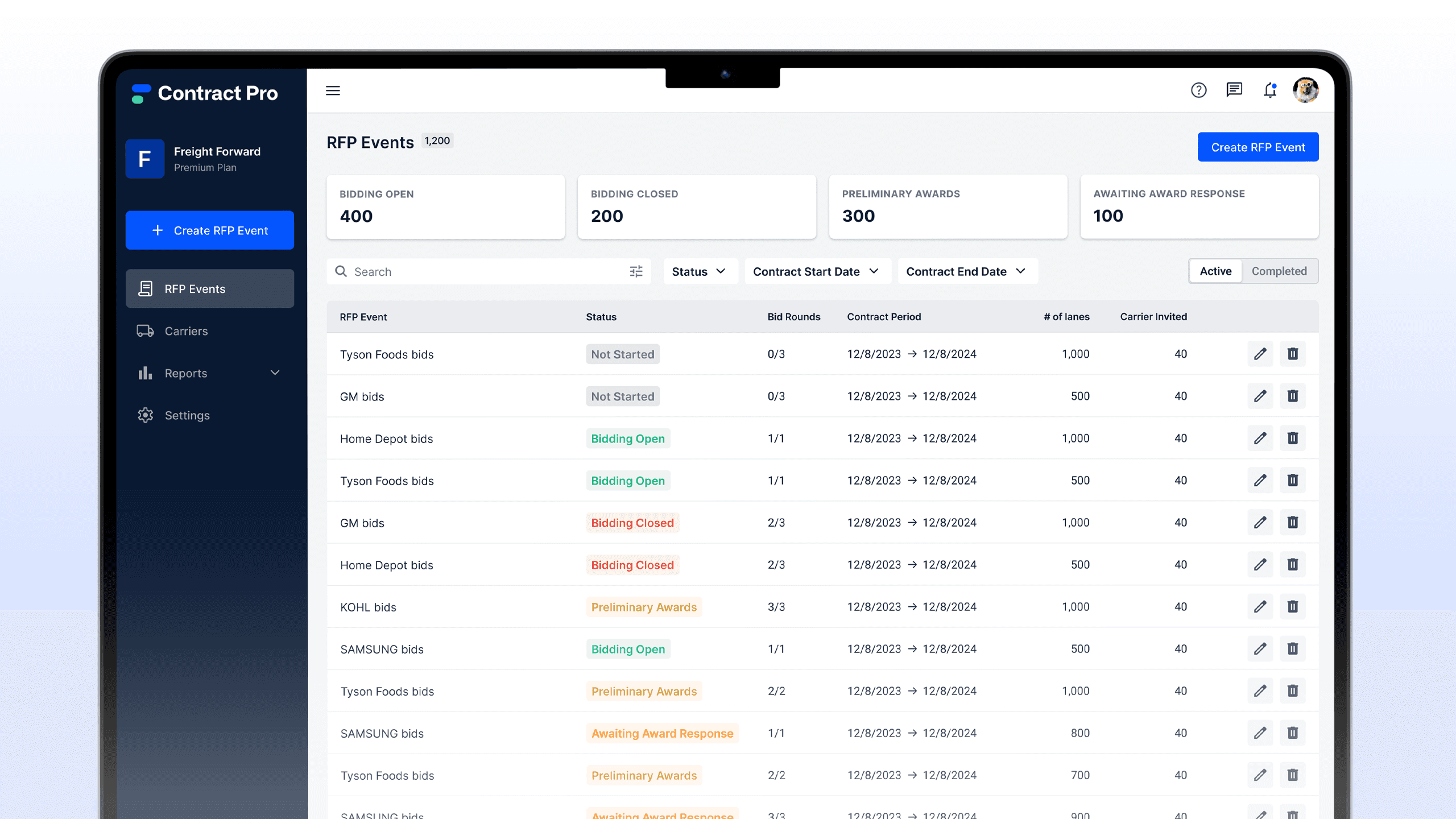
A web-based platform that connects shippers and carriers to streamline the contract procurement process, enabling efficient negotiation and securing of freight contracts through real-time data and a more intuitive workflow.
A web-based platform that connects shippers and carriers to streamline the contract procurement process, enabling efficient negotiation and securing of freight contracts through real-time data and a more intuitive workflow.
COMPANY
ZUUM APP
ZUUM APP
ROLE
Product Designer
Product Designer
TOOLS
Figma
Figma
YEAR
10 months
10 months
KEY RESULT
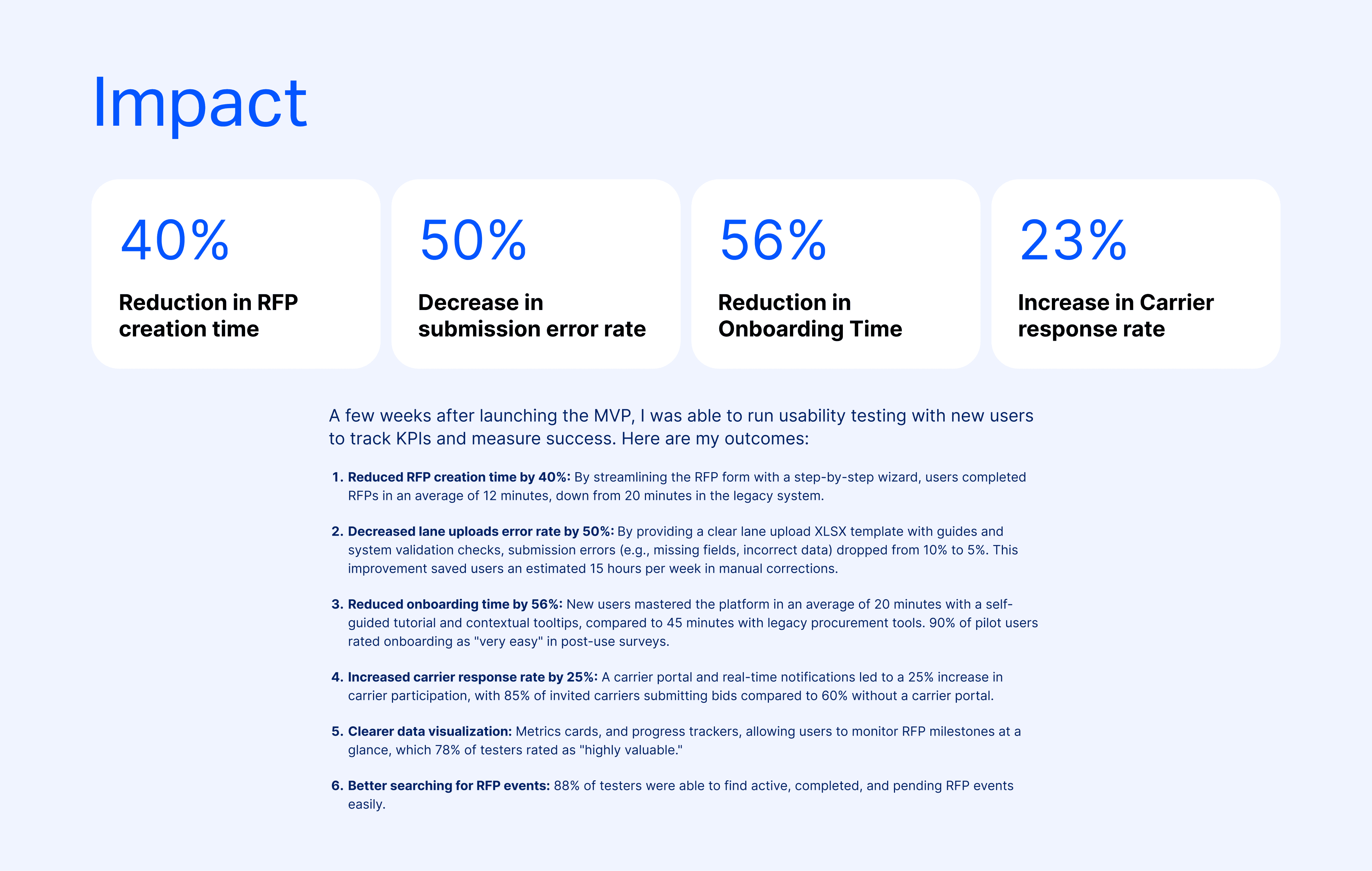
Improved procurement efficiency and adoption by streamlining RFP workflows, reducing errors and onboarding time, and increasing carrier participation through a more intuitive and data-driven experience.
Improved procurement efficiency and adoption by streamlining RFP workflows, reducing errors and onboarding time, and increasing carrier participation through a more intuitive and data-driven experience.
01
Overview
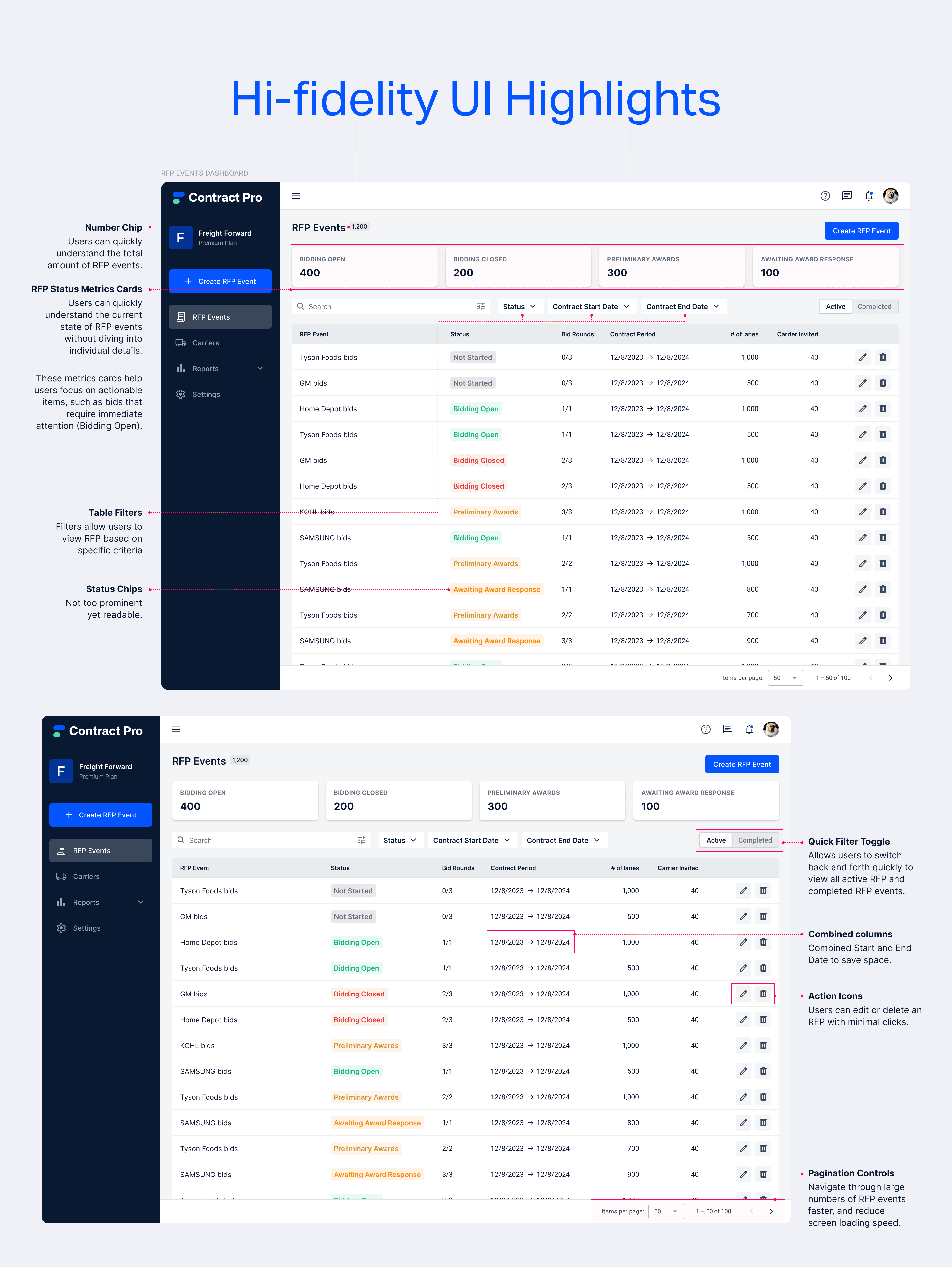
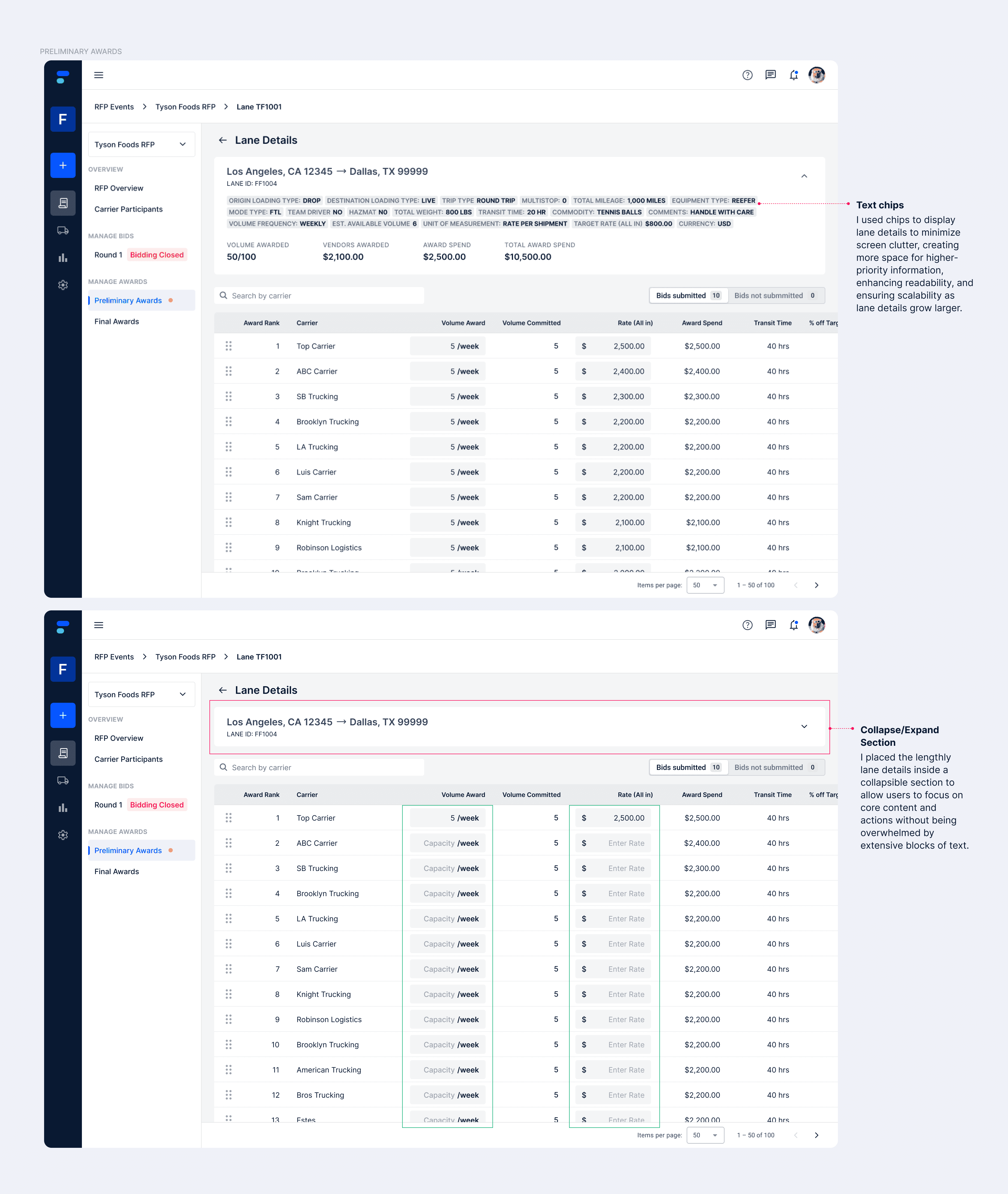
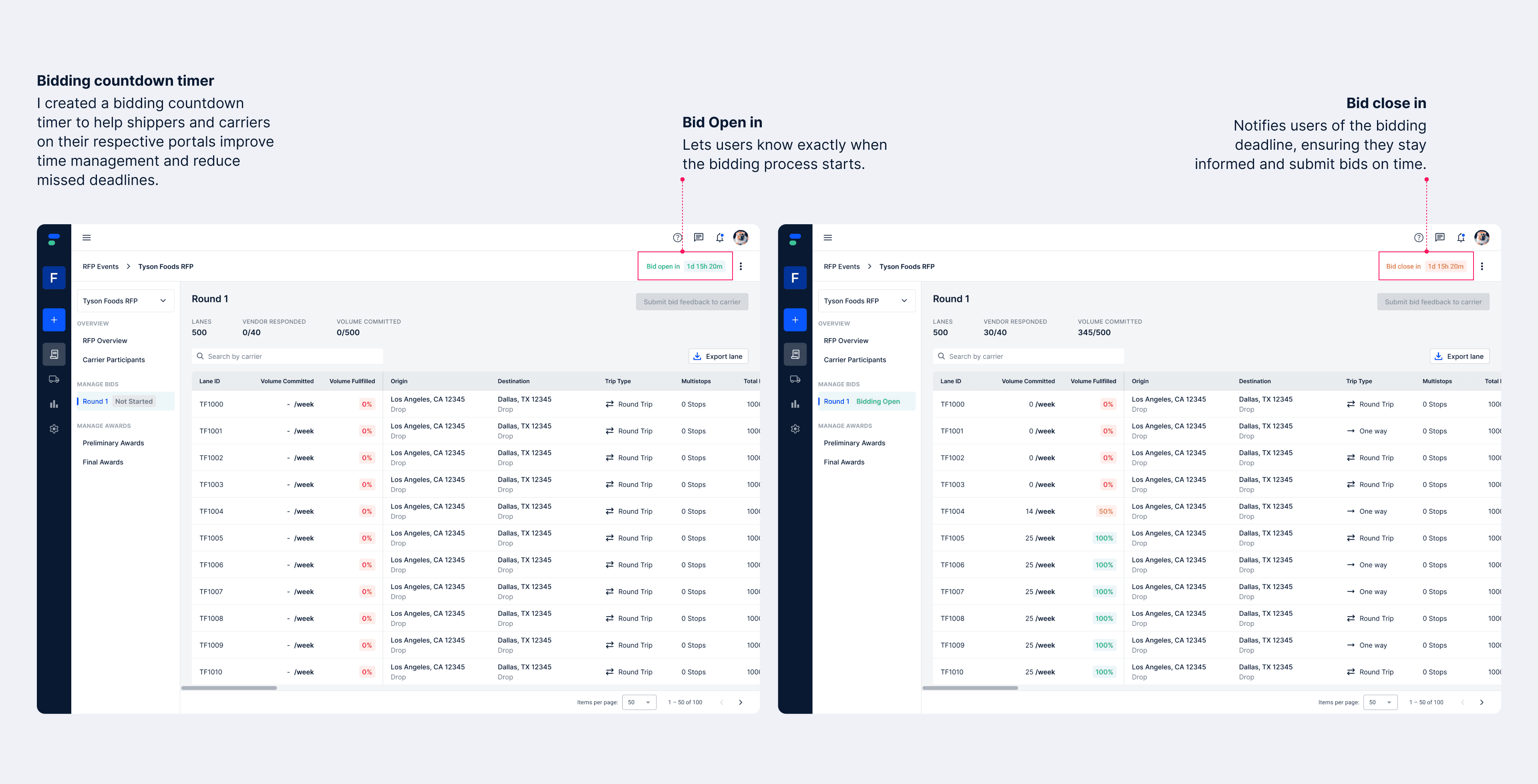
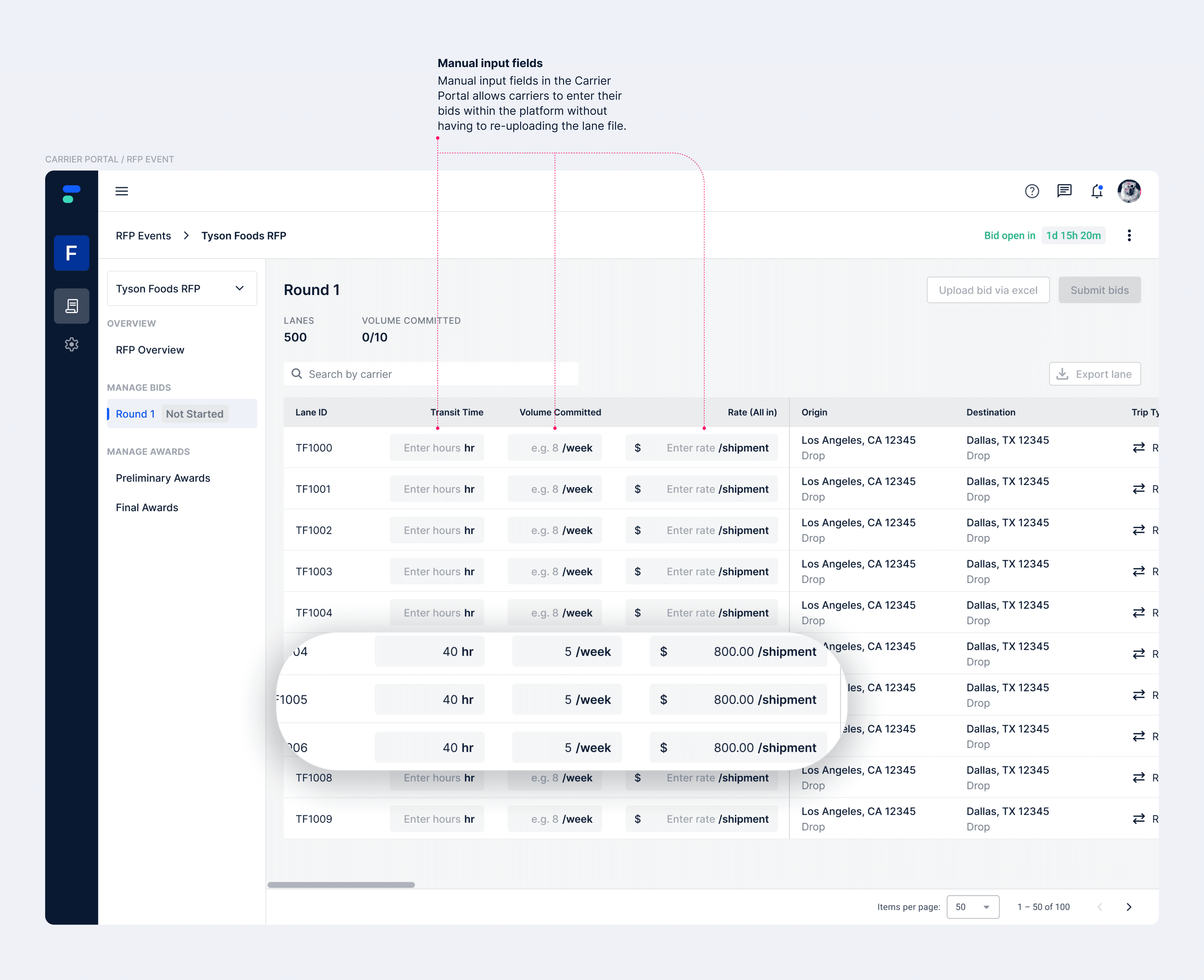
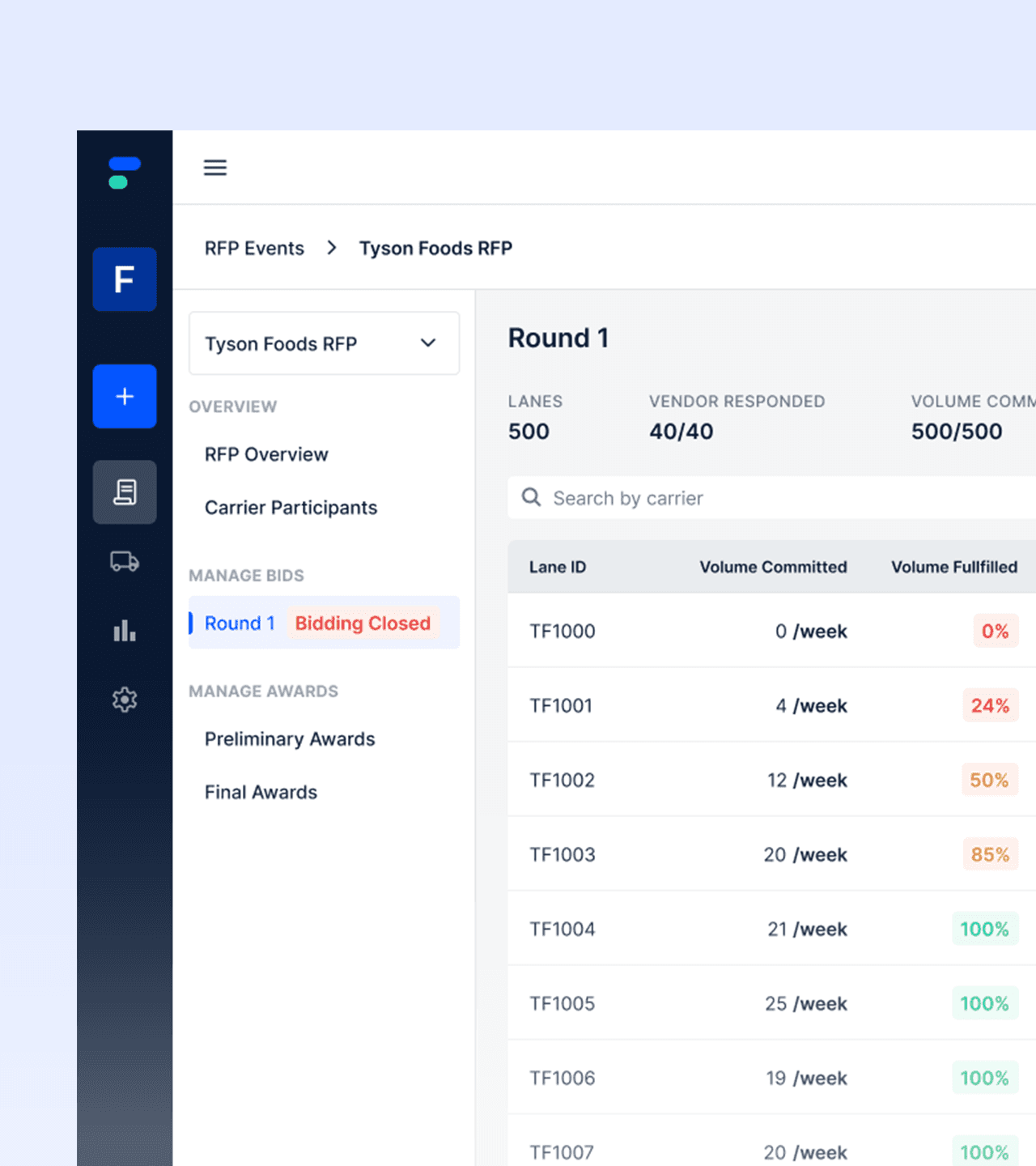
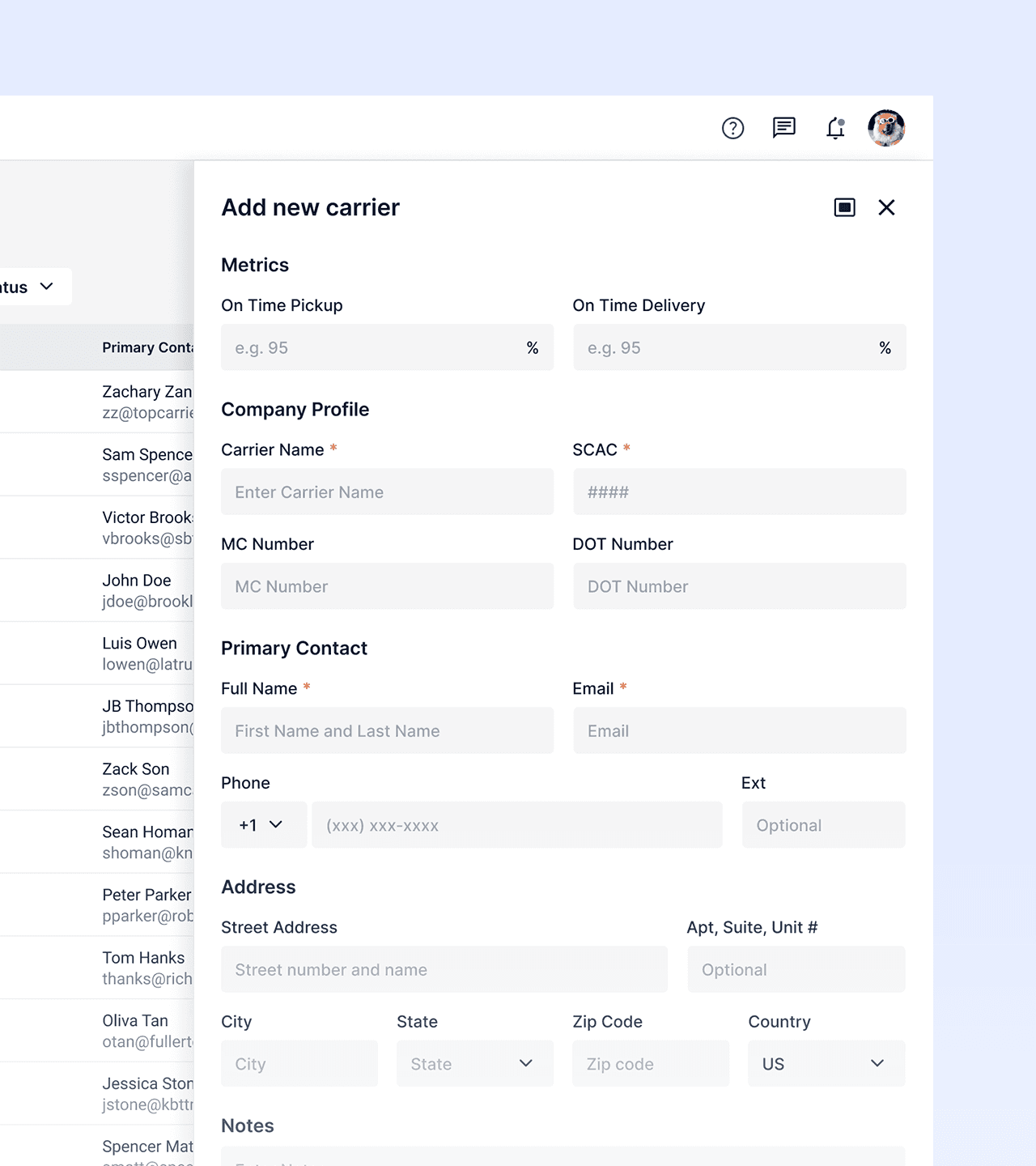
This is a Zuum’s standalone product that another Product Designer and I designed from 0 to 1. My goal was to design an efficient platform that enables shippers to manage thousands of lanes at scale, negotiate freight rates with carriers in real-time, and make more informed, cost-effective decisions through actionable data and performance metrics.
This is a Zuum’s standalone product that another Product Designer and I designed from 0 to 1. My goal was to design an efficient platform that enables shippers to manage thousands of lanes at scale, negotiate freight rates with carriers in real-time, and make more informed, cost-effective decisions through actionable data and performance metrics.
02
Challenge
This project started with a very broad scope and tight constraints, which made it challenging to balance business priorities with real user needs without overwhelming the team or the experience itself. On top of that, working in a data-heavy procurement space meant I had to carefully think about how to simplify complexity without losing important detail.
This project started with a very broad scope and tight constraints, which made it challenging to balance business priorities with real user needs without overwhelming the team or the experience itself. On top of that, working in a data-heavy procurement space meant I had to carefully think about how to simplify complexity without losing important detail.
03
Objective
My goal was to design a scalable RFP platform that helps shippers manage large volumes of lanes more efficiently, negotiate rates with carriers in real time, and make more confident, data-informed decisions through a clear and intuitive experience
My goal was to design a scalable RFP platform that helps shippers manage large volumes of lanes more efficiently, negotiate rates with carriers in real time, and make more confident, data-informed decisions through a clear and intuitive experience
My goal was to design a scalable RFP platform that helps shippers manage large volumes of lanes more efficiently, negotiate rates with carriers in real time, and make more confident, data-informed decisions through a clear and intuitive experience
04
Result
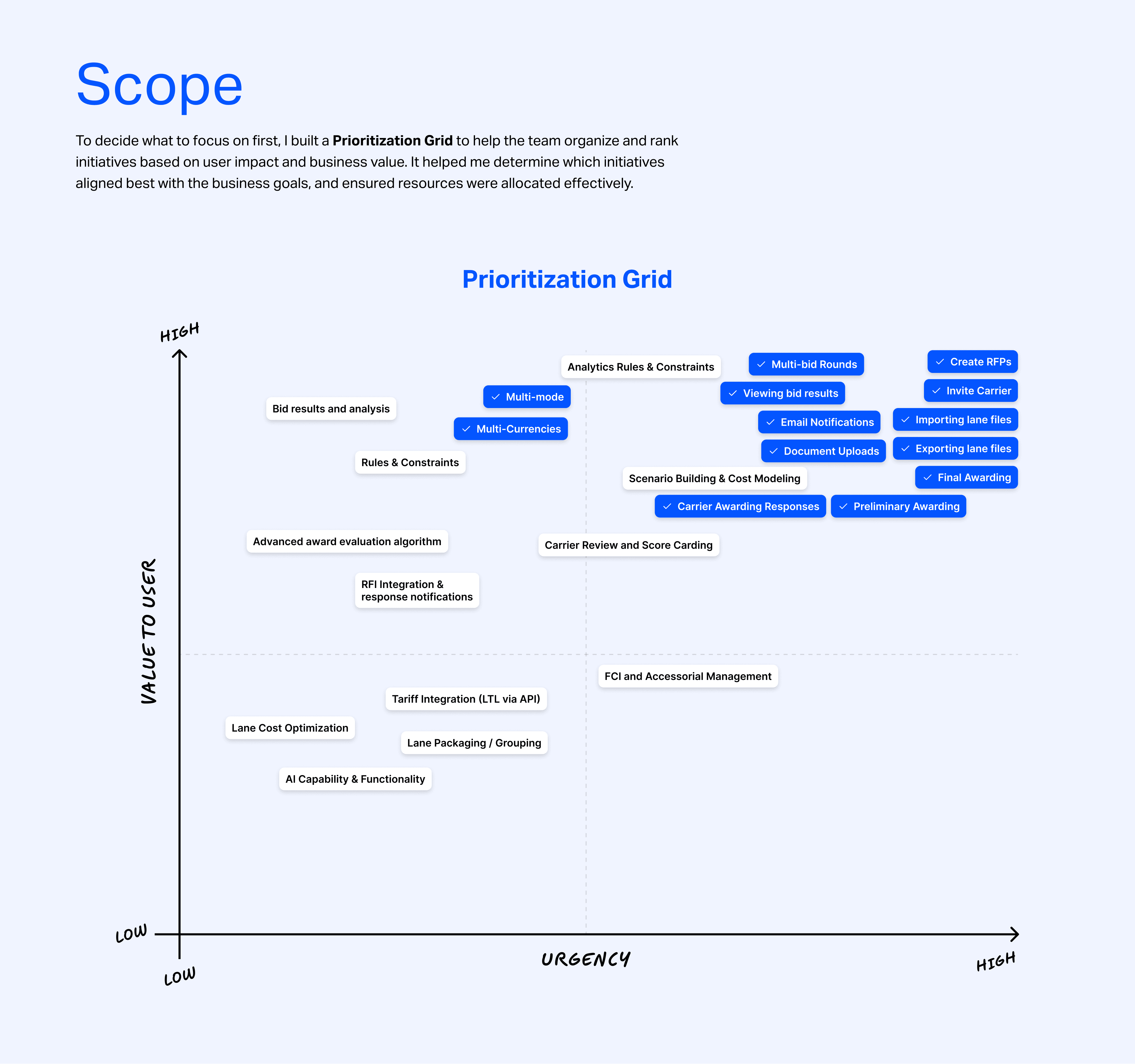
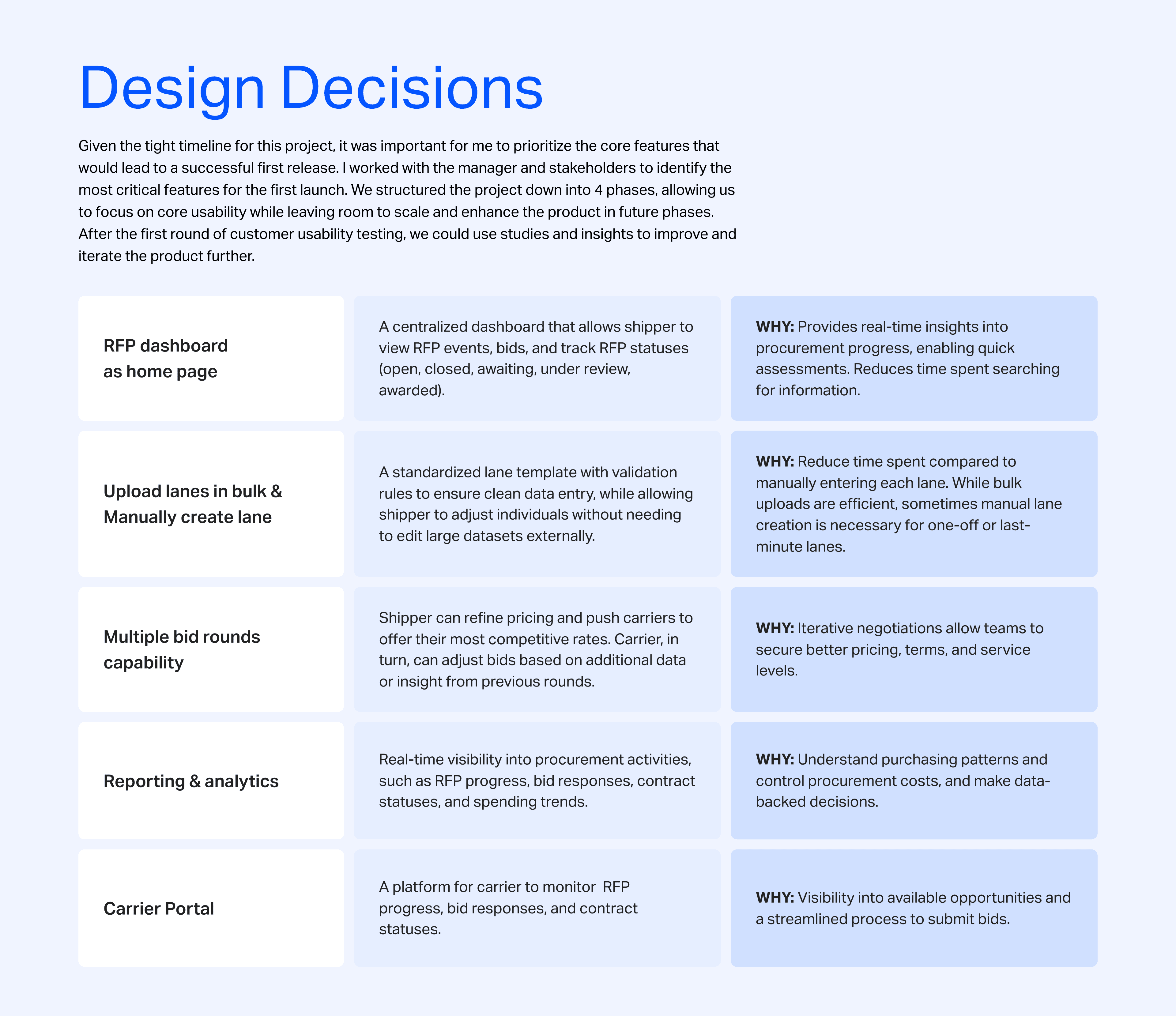
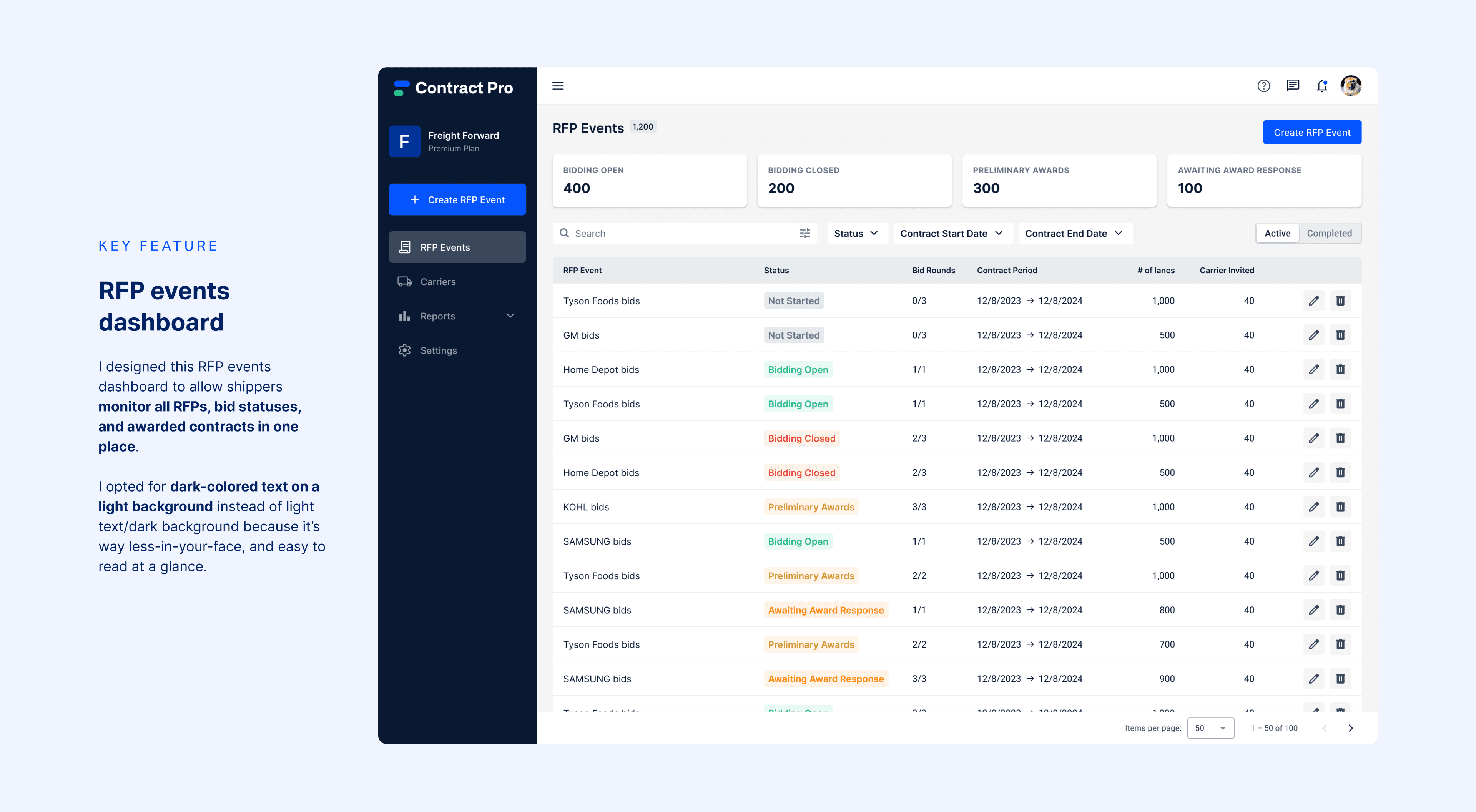
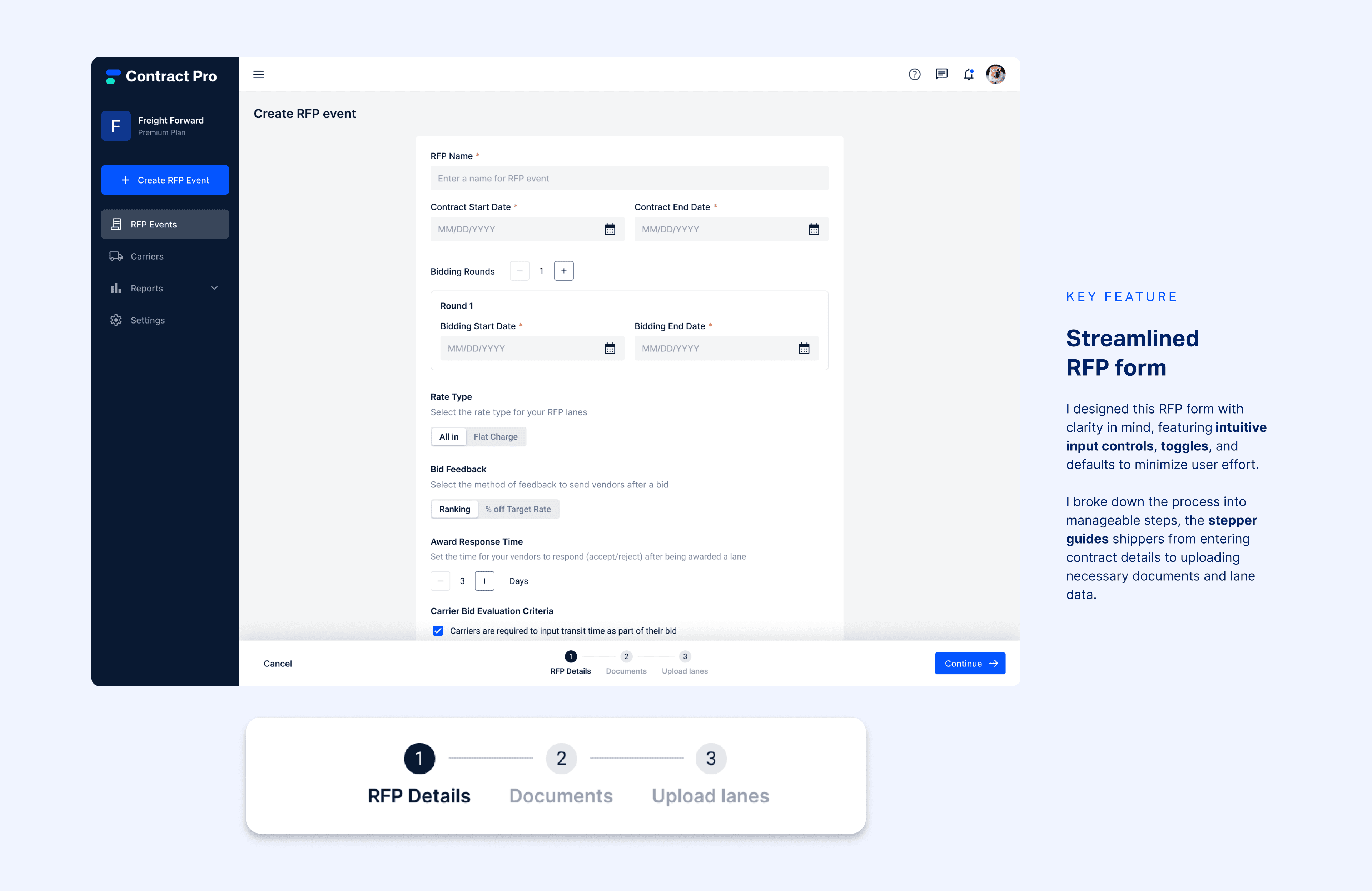
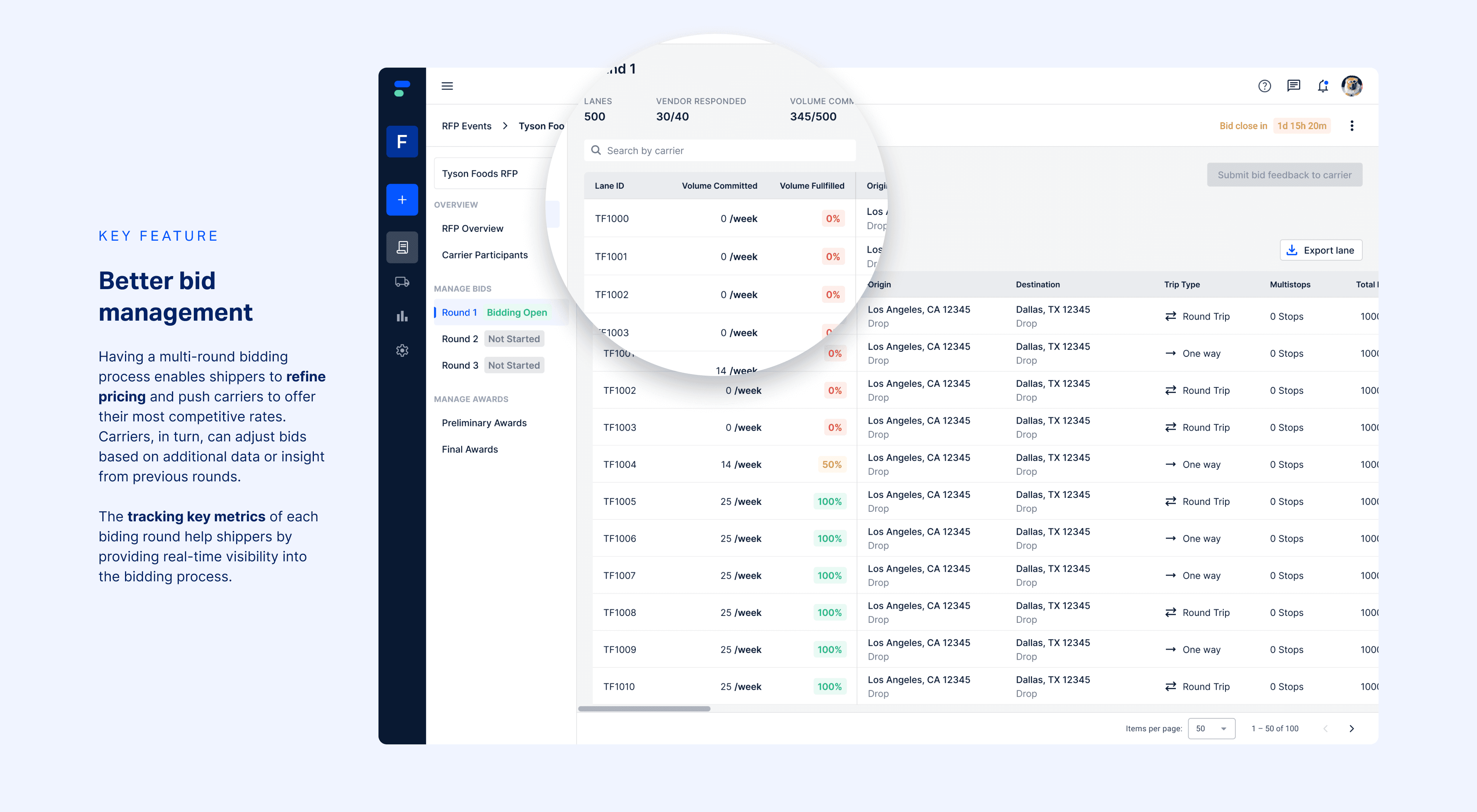
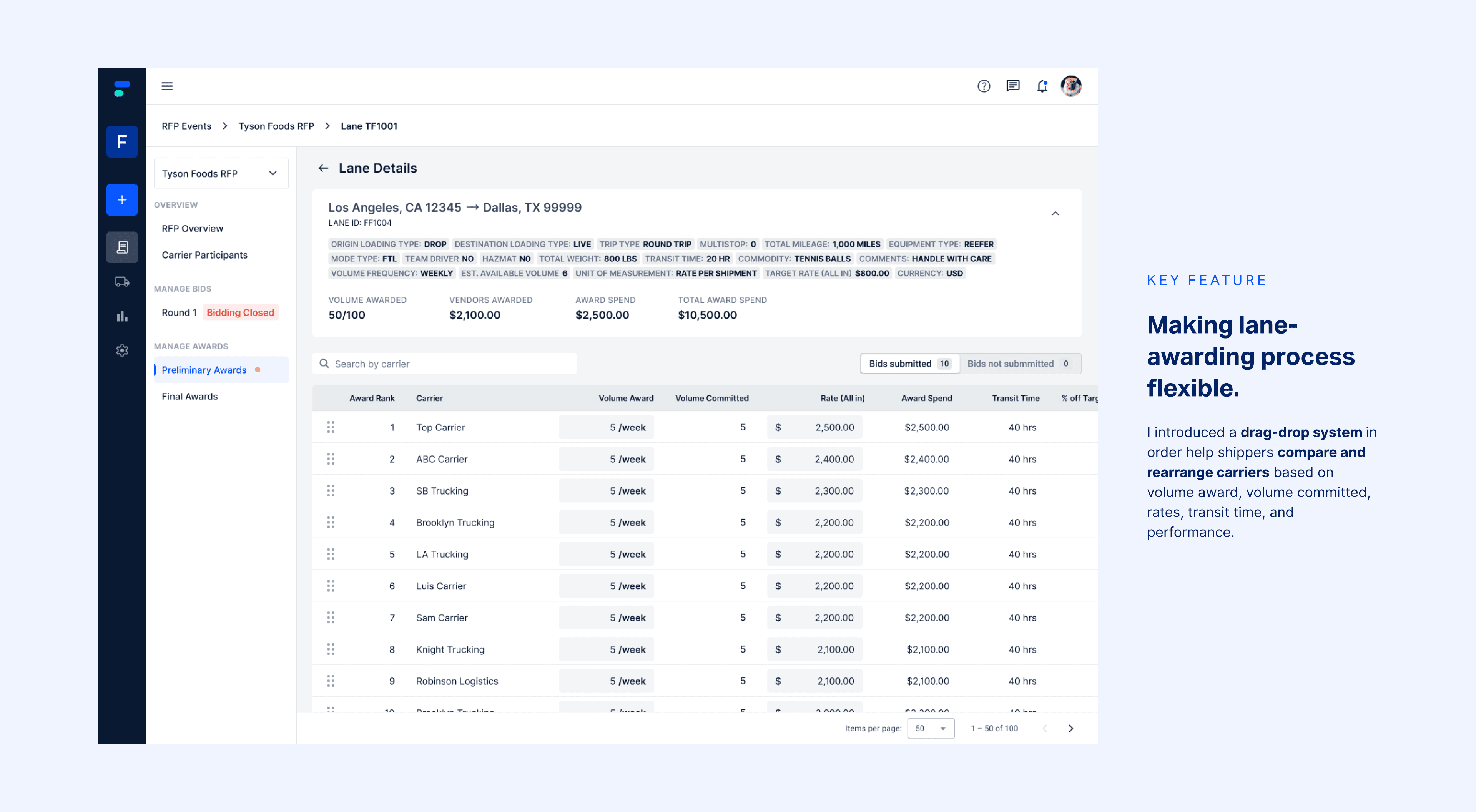
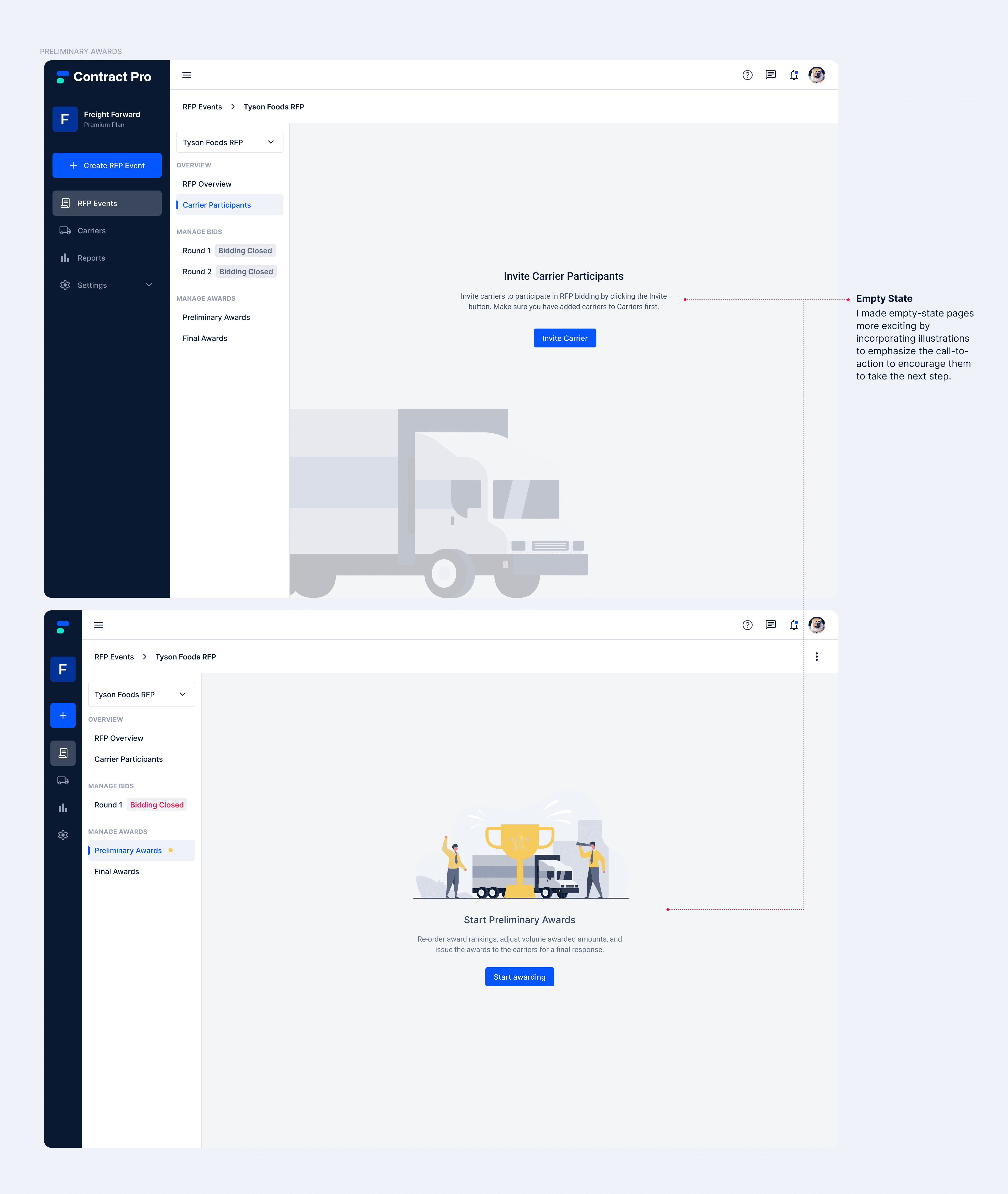
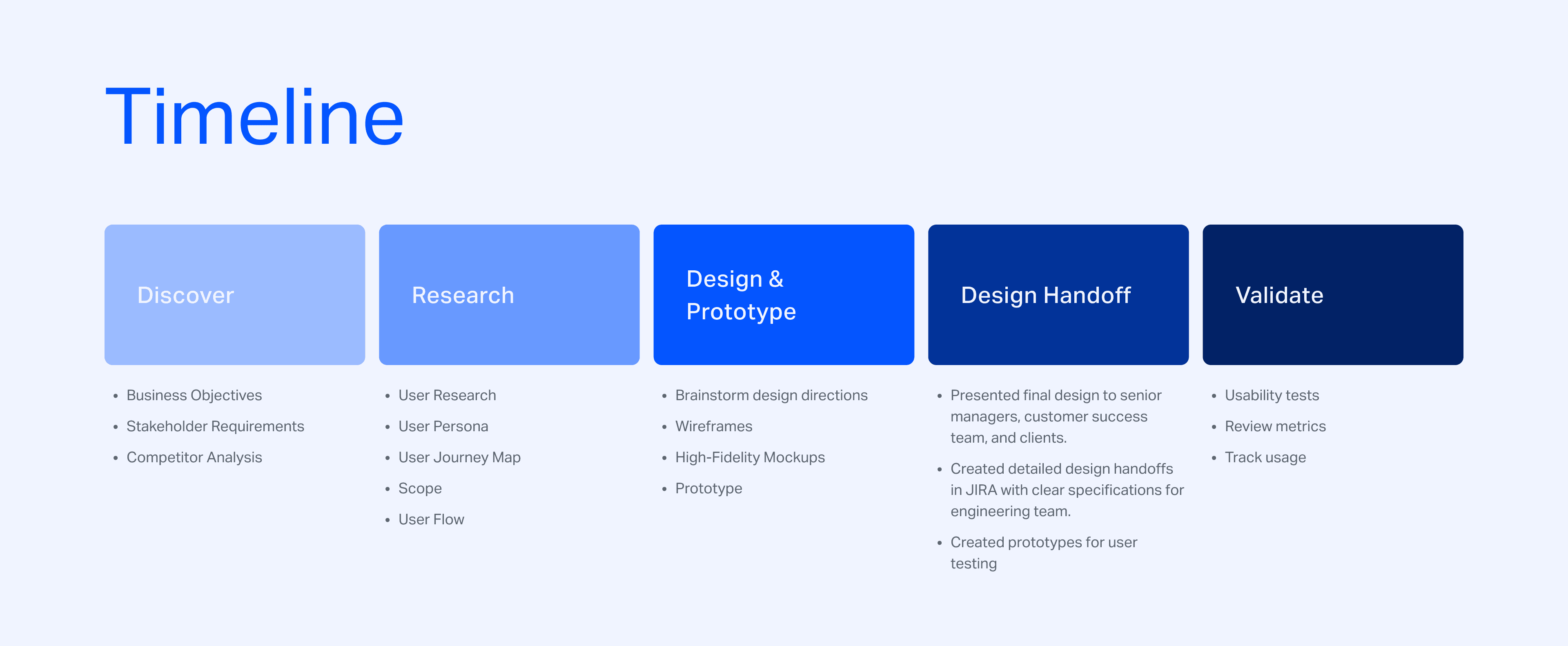
I worked closely with the product manager to break the work into a few focused phases and narrow in on the features that really mattered for the MVP. That helped us stay aligned and keep things moving without overcomplicating the experience. In the end, based on the user testing, the product felt much easier to navigate, especially for something as data-heavy as procurement. By focusing on structure, hierarchy, and simple interaction patterns, we made it easier for users to understand the data and make decisions with more confidence, while also setting up a foundation we could continue to build on.
I worked closely with the product manager to break the work into a few focused phases and narrow in on the features that really mattered for the MVP. That helped us stay aligned and keep things moving without overcomplicating the experience. In the end, based on the user testing, the product felt much easier to navigate, especially for something as data-heavy as procurement. By focusing on structure, hierarchy, and simple interaction patterns, we made it easier for users to understand the data and make decisions with more confidence, while also setting up a foundation we could continue to build on.
I worked closely with the product manager to break the work into a few focused phases and narrow in on the features that really mattered for the MVP. That helped us stay aligned and keep things moving without overcomplicating the experience. In the end, based on the user testing, the product felt much easier to navigate, especially for something as data-heavy as procurement. By focusing on structure, hierarchy, and simple interaction patterns, we made it easier for users to understand the data and make decisions with more confidence, while also setting up a foundation we could continue to build on.